


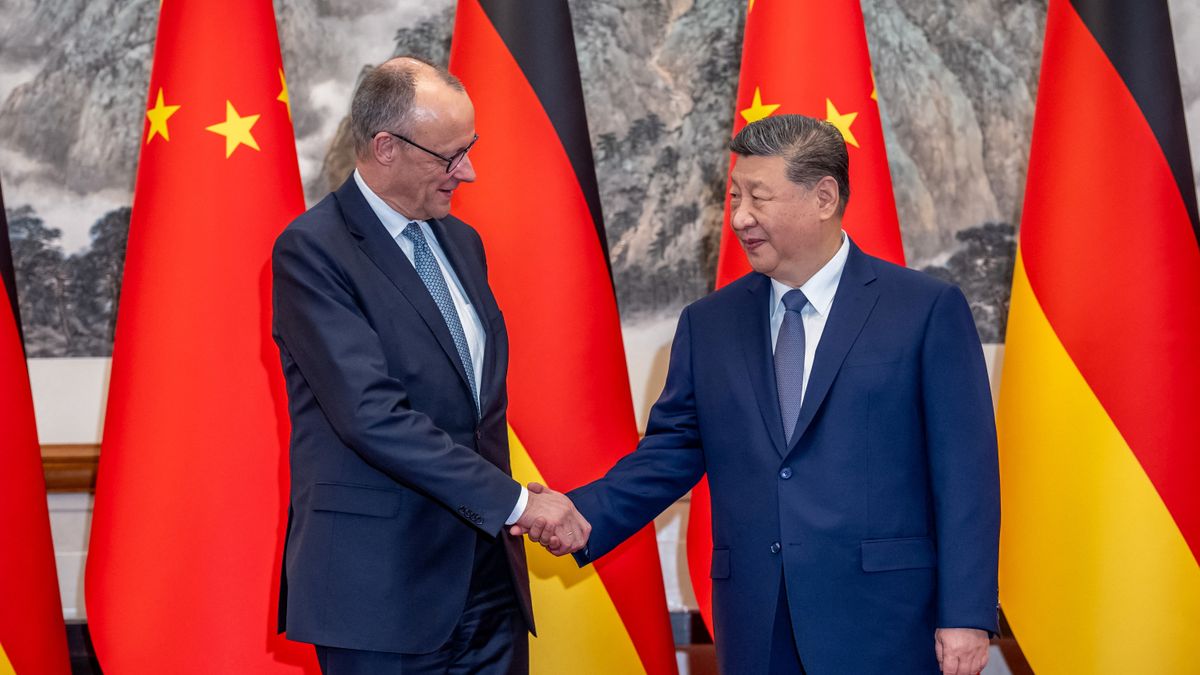
German Chancellor Friedrich Merz has announced a significant development for Airbus during his visit to Beijing, confirming that China is set to order up to 120 additional aircraft from the European aviation giant. This revelation followed Merz’s discussions with Chinese President Xi Jinping, marking a substantial boost for Airbus and a key outcome of the German delegation’s trip. While specific details regarding aircraft models or the total financial value were not disclosed, Merz indicated that this major order could pave the way for further contracts involving various other German companies, although those agreements are still pending finalization. The announcement highlights the ongoing economic engagement between Germany and China, even amidst increasing concerns over trade imbalances and market access.
Beyond the headline-grabbing Airbus deal, Merz also pointed to other agreements made during his visit, including partnerships between the China Media Group and leading German sports organizations such as the Deutsche Fußball Liga (DFL) and the German Table Tennis Federation. These cultural and sports collaborations aim to deepen bilateral ties across different sectors. However, a significant part of the Chancellor’s visit involved frank discussions on more challenging economic issues. Merz openly addressed Germany’s rapidly expanding trade deficit with China, which has quadrupled since 2020 to surpass 80 billion euros. He characterized this trend as “not healthy” and underscored the urgent need to find ways to reduce this substantial imbalance, advocating for a more balanced and sustainable trade relationship between the two economic powerhouses.
Chancellor Merz utilized his platform to advocate for “fair and transparent competition” as a fundamental requirement for expanding economic cooperation. He stressed the importance of adhering to agreed-upon rules and brought up critical issues like “systemic overcapacities, export restrictions, and access restrictions” that distort and hinder fair competition. Merz emphasized the necessity of openly discussing these challenges to ensure a level playing field for German businesses operating in China. While acknowledging the importance of mitigating risks associated with doing business in the vast Chinese market, he firmly stated that Germany should not “decouple” itself from China. Instead, he called for maintaining open communication channels to navigate the complex economic and political landscapes effectively.
Furthermore, Merz underscored the crucial importance of a robust European-Chinese dialogue, suggesting that the European Union serves as the appropriate forum for resolving all currency and trade policy matters. He expressed optimism about the potential for continued growth between the two economies, provided that underlying issues of fairness and reciprocity are adequately addressed. Merz’s two-day inaugural visit to China was accompanied by a large economic delegation, reflecting the strategic importance Germany places on its relationship with the Asian giant, despite the multifaceted challenges. The significant Airbus China order stands as a testament to the ongoing commercial engagement, even as Germany seeks to recalibrate its economic approach to China.
