


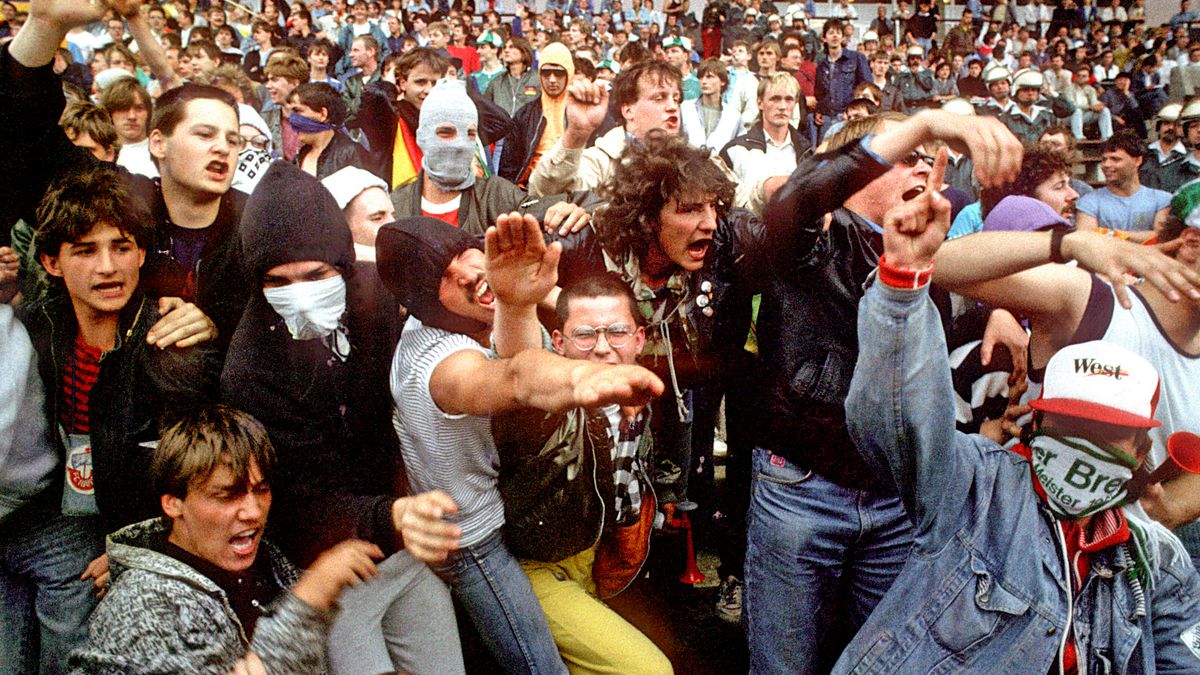
The early 1990s in post-reunification East Germany saw a complex surge of right-wing extremist activity, often misrepresented in historical accounts. This article aims to correct persistent false explanations regarding the nature of this violence, specifically by examining hooligans in East Berlin’s Prenzlauer Berg district in 1990. These groups, paradoxically labeled “anti-authoritarian and right-wing,” represent a nuanced chapter in Germany’s post-reunification history, challenging simplistic categorizations and demanding a deeper understanding of their motivations amidst profound societal upheaval.
The “anti-authoritarian and right-wing” description for these early 90s East German hooligan groups reveals a critical complexity. Emerging from a vacuum of state control post-GDR, their raw anger against authority and perceived external influences fused with xenophobic and nationalist ideologies. This anti-authoritarian stance, born from decades of state suppression and the chaos of reunification, manifested in often spontaneous acts of violence. It reflected a volatile mix of frustration, identity crisis, and a yearning for order or belonging, channeled through right-wing narratives rather than traditional neo-Nazi structures.
Prenzlauer Berg in 1990 offers a key perspective. Then a diverse district amidst crumbling infrastructure and uncertainty, it saw hooligan activity as symptomatic of wider East German shifts. The collapse of the GDR’s security apparatus and nascent democratic institutions allowed these groups relative impunity. Their actions fueled a climate of fear, especially for minorities, highlighting the need to understand specific socio-political conditions enabling their rise, rather than resorting to oversimplified notions of inherent Eastern violence.
Correcting these historical narratives is crucial for understanding contemporary right-wing extremism in Germany. By acknowledging the interplay of anti-authoritarian impulses, identity crises, and specific post-reunification socio-economic factors that shaped groups like the Prenzlauer Berg hooligans of 1990, we move beyond superficial analyses. This deeper insight into systemic conditions and ideological nuances helps develop more effective strategies against right-wing violence today, ensuring historical lessons are accurately interpreted to prevent future resurgence.
