


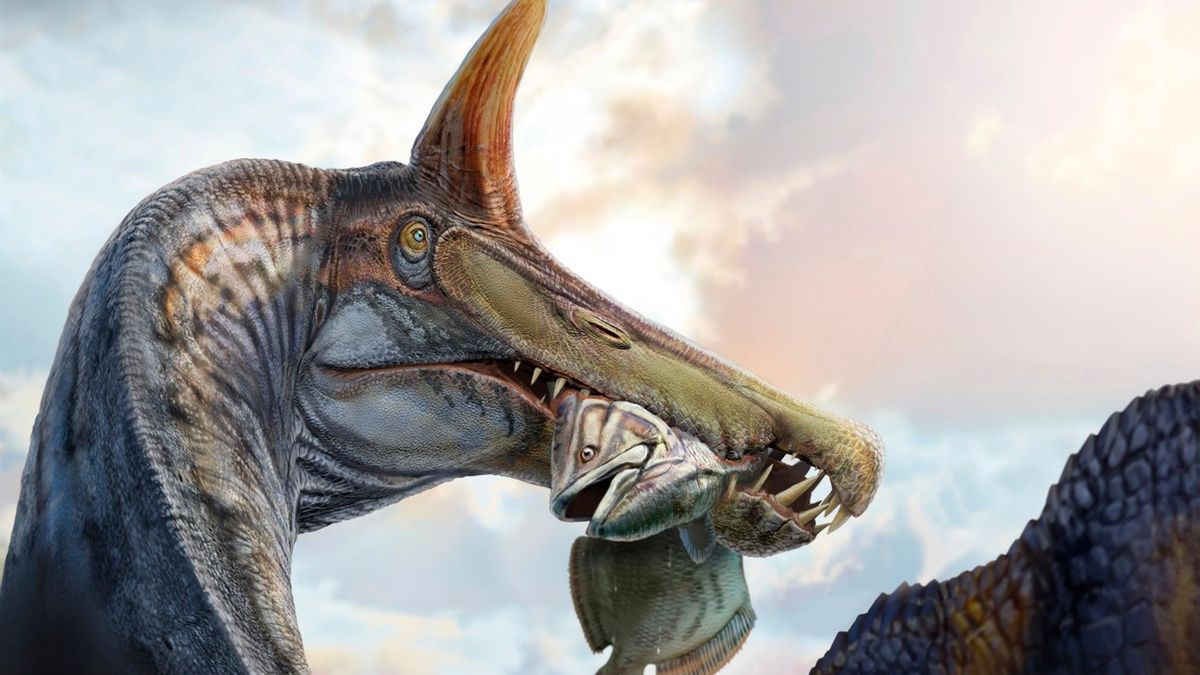
In a monumental find, researchers have unearthed the fossilized remains of a colossal Spinosaurus mirabilis in Niger’s central Sahara Desert. This remarkable predator, weighing over seven tons and stretching more than ten meters long, was a formidable fish-hunter during the Cretaceous period. The Latin “mirabilis,” meaning astonishing or wondrous, perfectly captures the awe inspired by this creature. Lead researcher Paul Sereno of the University of Chicago envisioned it as a “hell heron,” capable of wading through two-meter-deep waters. However, it likely spent most of its time in shallower river systems, stalking the abundant large fish of its era. This discovery offers unprecedented insights into the ancient ecosystems of what is now one of Earth’s most arid regions.
The newly identified Spinosaurus mirabilis sported a distinctive, scimitar-like head crest, nearly half a meter tall, likely used for display or hunting. This magnificent creature thrived approximately 100 to 95 million years ago, coexisting with long-necked dinosaurs along ancient riverbanks. The groundbreaking findings were published in “Science,” marking a significant advancement in understanding dinosaur diversity. This inland discovery is particularly noteworthy as prior Spinosaurus remains were predominantly found closer to the ancient Tethys Sea coast. Its unique skull and dental structure paint a clear picture of a specialized aquatic predator, perfectly adapted to its riverine world, further detailing the rich prehistoric life of the Sahara.
The identification of Spinosaurus mirabilis marks the first confirmed new Spinosaurus species in over a century, highlighting the rarity and significance of the find. Paul Sereno described the discovery as profoundly emotional, recounting the memorable moment in their desert camp. Using solar power amidst the vast Sahara, they assembled 3D digital models from the unearthed bones, revealing the complete skull of the new species for the very first time. Sereno’s expedition was inspired by a 1950s paper describing a single giant tooth from the same untouched area. “For over 70 years, no one had visited this site,” Sereno explained. Guided by a local Tuareg, the journey through the “sand seas” was a grand adventure, leading them to an even more secluded fossil area where the new species awaited.
At the discovery site, initial findings included individual jaw fragments protruding from the Saharan sand, which led to the excavation of further crucial bone parts. Subsequent analysis revealed another striking characteristic: interlocking upper and lower tooth rows, forming an undeniably “deadly trap for slippery fish.” This specialized dentition further reinforces its predatory nature. While previous Spinosaurus remains were typically found near the African margins of the ancient Tethys Sea, this new site is situated approximately 500 to 1000 kilometers from where the nearest ancient coastline would have been. This geographical isolation suggests the animals’ habitat was likely a vast, river-crossed forest environment, a dramatic contrast to today’s desert, offering invaluable insights into the Sahara’s prehistoric ecological tapestry and the adaptability of these incredible ancient creatures.
