


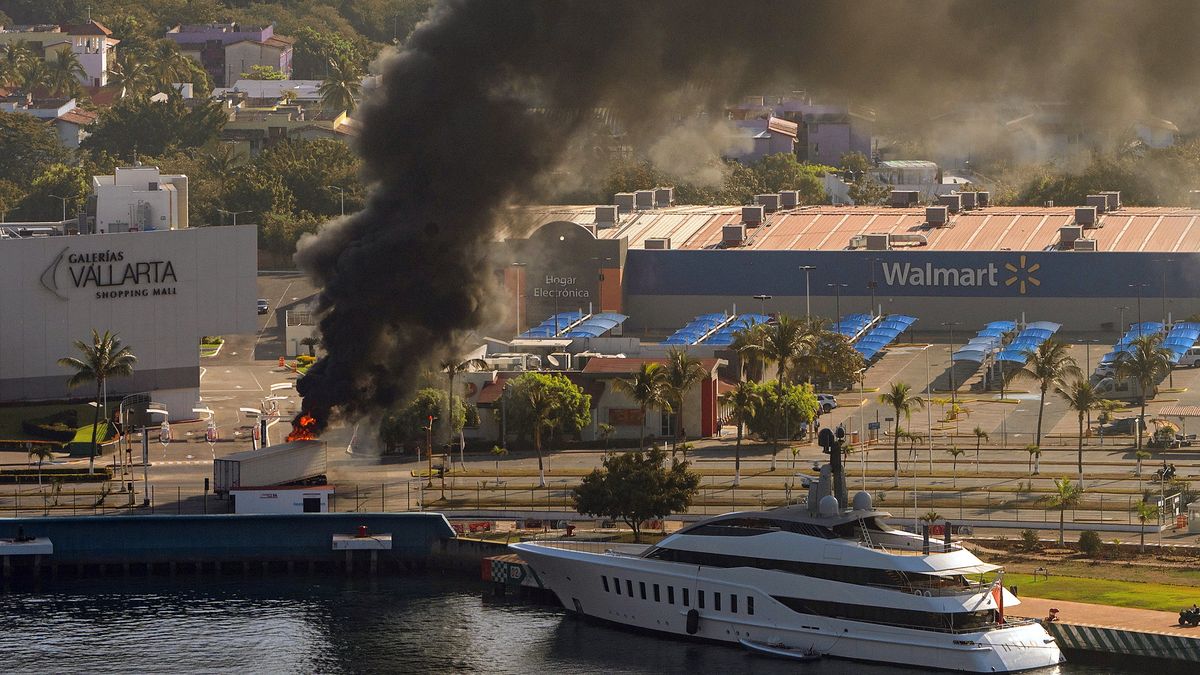
Mexico is grappling with a “war-like situation” just 100 days before co-hosting the FIFA World Cup, following the recent killing of notorious drug lord Nemesio “El Mencho” Oseguera Cervantes. The operation has sparked widespread violence, leading to at least 73 deaths and the deployment of over 10,000 soldiers. DFB Managing Director Andreas Rettig expressed deep concern in the “Augsburger Allgemeinen,” stating his thoughts are with those suffering and admitting he currently feels no anticipation for the tournament due to the ongoing unrest. Guadalajara, a key host city in the heavily affected Jalisco state, is slated to host four World Cup matches, intensifying worries about fan safety.
FIFA President Gianni Infantino, however, remains remarkably unfazed. Speaking from Barranquilla, Colombia, he confidently told AFP that he is “very calm” and that “everything will be fantastic.” Despite Infantino’s reassurances, the German government’s tourism coordinator, Christoph Ploß (CDU), urged FIFA to collaborate with the host nations to ensure fan safety and adherence to security protocols. Mexico is set to host 13 matches, including the opening game in Mexico City, with Guadalajara and Monterrey also serving as venues.
Mexican President Claudia Sheinbaum echoed FIFA’s optimistic tone, asserting that her government has the situation under control. She emphasized that all federal, state, and local authorities are coordinated and prepared, assuring that there would be “no risk whatsoever” for fans and that “all security precautions” are in place. This stance aims to project an image of stability and command over the volatile situation to the international community and prospective attendees.
Yet, expert opinions cast a shadow of doubt over these reassurances. Security analyst David Saucedo highlighted in ARD that historical patterns show major blows to drug cartels often trigger prolonged and bloody power struggles. With nearly 13,000 people reported missing in Jalisco alone, Saucedo questions the government’s ability to adequately protect World Cup visitors, suggesting that while the government aims to convey control, the facts on the ground indicate a different reality. The long-term success of the fight against organized crime and its implications for the World Cup remain highly uncertain.
