


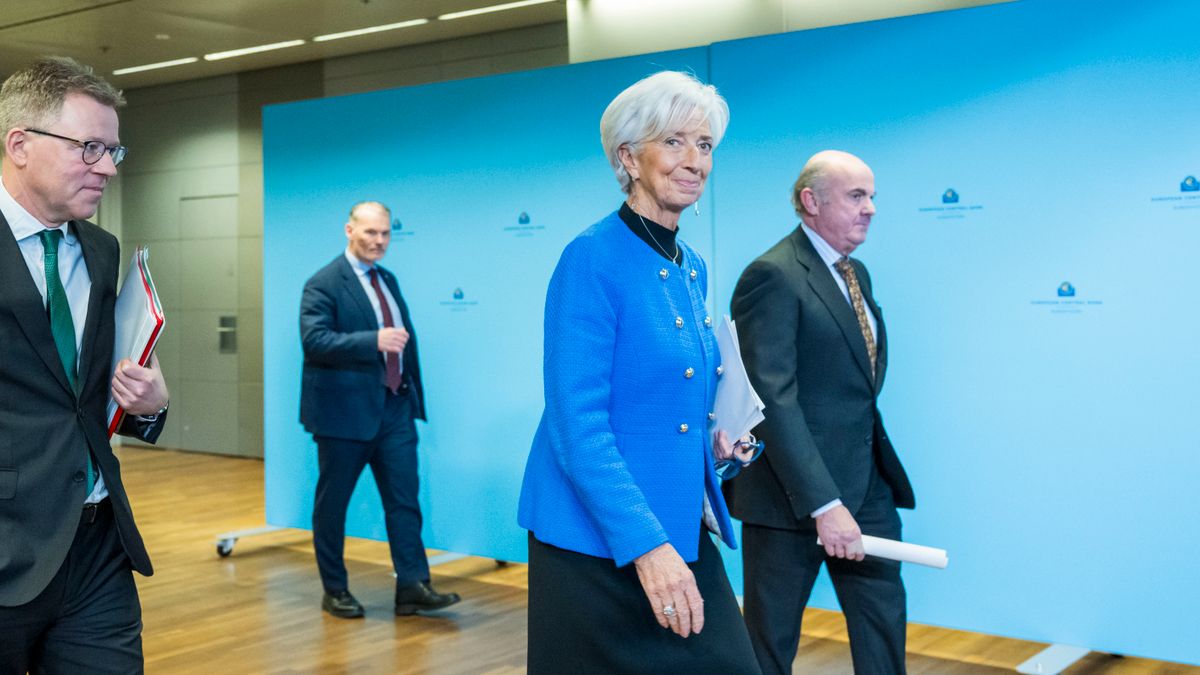
Recent speculation points towards a potential premature departure of European Central Bank President Christine Lagarde from her prominent role. Alongside her Vice President Luis de Guindos, Lagarde has reportedly faced criticism concerning several significant misjudgments during their tenure. While the exact nature of these alleged missteps remains subject to ongoing debate and detailed analysis, the mere whisper of such an early exit sends ripples through financial markets and political circles across the Eurozone. The leadership of the ECB is crucial for maintaining economic stability, and any perceived instability at the top naturally draws intense scrutiny from investors, economists, and the public alike. This period marks a critical juncture for the institution, grappling with inflation, interest rate hikes, and geopolitical uncertainties.
The role of the ECB President demands not only astute economic foresight but also robust political navigation and unwavering public confidence. Allegations of misjudgments, whether pertaining to inflation forecasting, the timing and magnitude of interest rate adjustments, or broader communication strategies, can erode this essential trust. In a complex economic environment characterized by persistent inflationary pressures and the aftermath of multiple crises, accurate assessment and timely action are paramount. Any deviation from optimal policy paths, or a perceived failure to anticipate key economic shifts, can have profound implications for millions of citizens, affecting everything from borrowing costs to savings values and employment prospects throughout the currency bloc. The credibility of the central bank’s leadership is its most vital asset, especially when guiding diverse economies through turbulent waters.
While specific details of the “Fehleinschätzungen” attributed to Lagarde and de Guindos are not publicly detailed in the provided context, typical areas of central bank scrutiny often involve the accuracy of macroeconomic projections, particularly regarding inflation, and the responsiveness of monetary policy to evolving economic data. Critics might point to a perceived delay in addressing rising inflation, or conversely, an overly aggressive stance that could stifle growth. Managing expectations while steering 19 diverse economies requires a delicate balance, and any perceived imbalance can fuel calls for leadership change. The interplay between fiscal policies of member states and the overarching monetary policy of the ECB adds another layer of complexity, making consensus-building and decisive action incredibly challenging. The stakes are incredibly high, as the Eurozone’s economic future hinges on sound judgment at its highest monetary authority.
Should Christine Lagarde indeed leave her post ahead of schedule, it would trigger a significant leadership transition at a pivotal moment for the European economy. Such an event would necessitate a careful and swift succession process to ensure continuity and reaffirm the ECB’s commitment to its primary mandate of price stability. The next leader would inherit a challenging landscape, tasked with rebuilding any potentially lost confidence, navigating ongoing economic headwinds, and adapting monetary policy to future shocks. The market’s reaction to such a departure and the subsequent appointment would be closely watched, reflecting the importance placed on strong, credible leadership at the heart of Europe’s economic governance. The very discussion of an early exit underscores the immense pressure and accountability inherent in one of the world’s most influential financial positions.
